
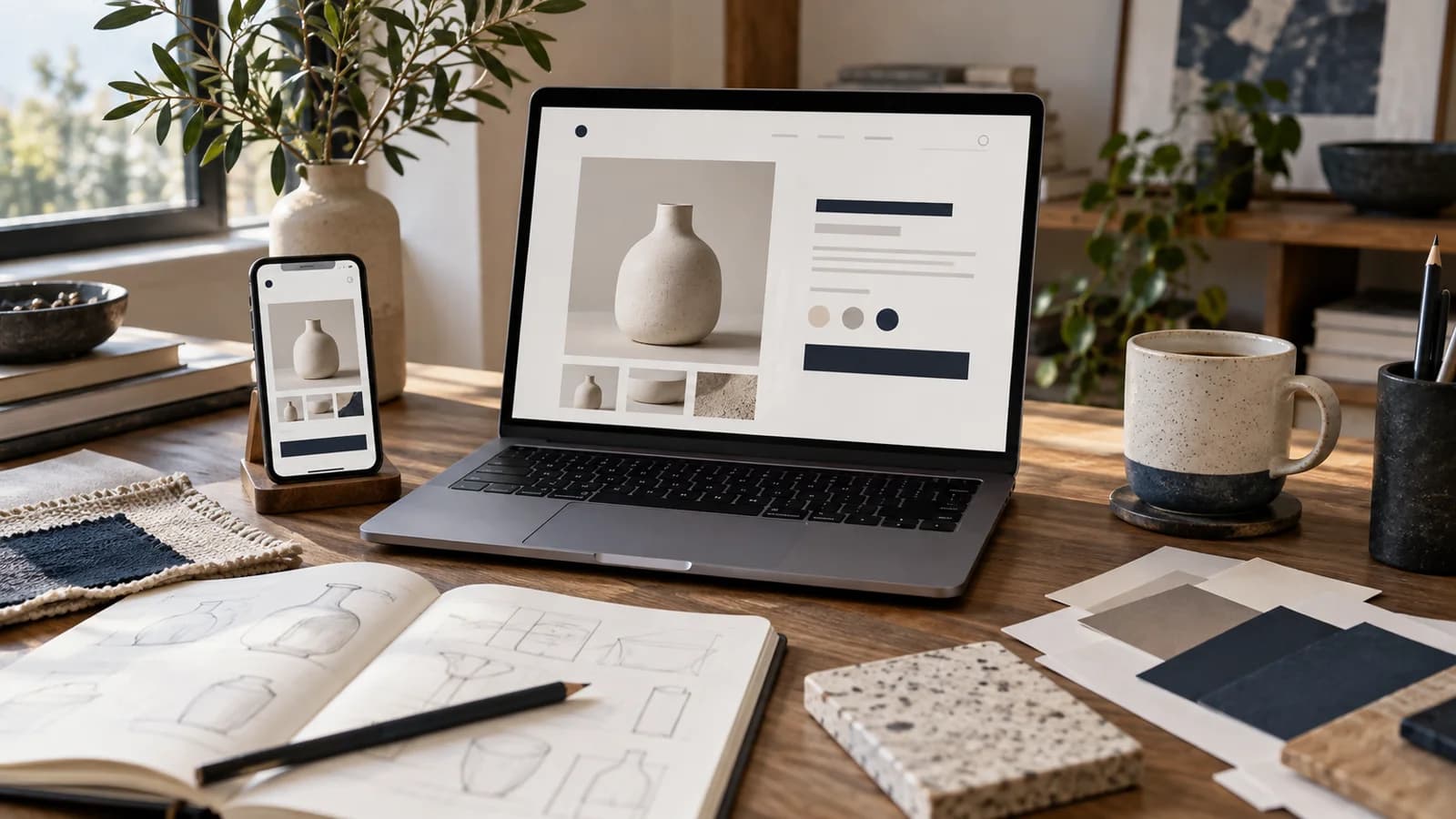
For a new Shopify store, begin with pages people actually need: a clear homepage, useful collections and specific product pages. Give each page a distinct purpose, descriptive title, original product details and links from navigation. Submit a sitemap and check indexing in Search Console; publishing pages does not guarantee a ranking or appearance in an AI answer.
- 01HomeBrand and category
- 02CollectionComparable choices
- 03ProductDetails and delivery
- 04GuideQuestion-led support
Map questions to the right page
The homepage explains the brand and its main category. A collection answers what belongs together and helps buyers compare. A product page answers specifications, benefits, delivery, returns and price. A guide answers a broader question that cannot be answered well by a product listing. Do not create ten thin pages for near-identical keyword variations; improve the strongest page for that intent.
Make the path crawlable and human
Use descriptive links from menu to collection to product, and from relevant guides to the products they explain. Google says its understanding of an ecommerce site's structure depends partly on these links. Use readable URLs, unique titles and accurate image alt text. Keep product data current; a page describing a variant you no longer sell is not useful search content.
Launch, then inspect evidence
Verify ownership in Search Console, submit the sitemap and inspect whether key pages are indexed. Google's launch guidance also recommends checking indexing progress. Search impressions may arrive before clicks. If a page receives impressions but few visits, inspect the title and whether it answers that search. If it is not indexed, check crawl access and canonicalization before rewriting copy.
A small query-to-page example
If your store sells compact lighting for renters, “small desk lamps” may belong on a collection with a useful comparison, while “does this lamp fit a 35 cm shelf?” belongs on a specific product page with dimensions. “How to light a rented desk without drilling?” could justify a guide with a practical setup example and links to the relevant products. Do not force all three onto one page or make three copies of the same sales pitch. Check Search Console later to see which pages actually gain impressions for these intents; this example is a planning exercise, not keyword-volume data.
AI search does not require a magic tag or a separate AI-only page. Google's AI-features guidance points back to ordinary crawlability and helpful content. Start with the product-page checklist, then create guides only where you can add firsthand details or a useful decision tool.
Draw a menu-to-collection-to-product map, then verify that every important page is reachable by a normal link and indexed after launch.